

[Case] The second set of boot pressure of the big finger equipment ran successfully!
Release time:
2018-01-16
Jianghe Paper PM2 is a 3200mm/1000 m/min special cultural paper machine. The press section adopts the traditional 3-roll 2-nip composite press plus one positive press. The press dryness is 46% higher, and the press has many broken ends and low operation efficiency, which limits the production capacity of the machine.
After many investigations, the big finger equipment decided to change the pressing department to a compound pressing with shoe pressing, and undertook this technological transformation project.
Existing problems:
The higher dryness of the web out of the press section, 46%, has reached the dewatering limit of this dynamic instantaneous press. In the production process, in order to make the paper web to obtain a larger degree of dryness, only through a large line pressure to complete, which is bound to cause the loss of some physical indicators of paper (such as paper loose thickness) and equipment wear, limiting the quality and diversity of paper, increasing the cost of equipment operation and maintenance;
The wet strength of the paper web is not high from the second pressure to the third pressure, and the open interval is long. With the change of process and speed, the paper breaks frequently here, which greatly limits the speed-up space and operating efficiency of the paper machine;
There is only one paper loss pool in the press section, and the wet paper web peeled off by the scraper in the three pressure zones must be cleaned manually, which poses a great potential safety hazard to the production and equipment and increases the workload of the operators.
Renovation scheme:
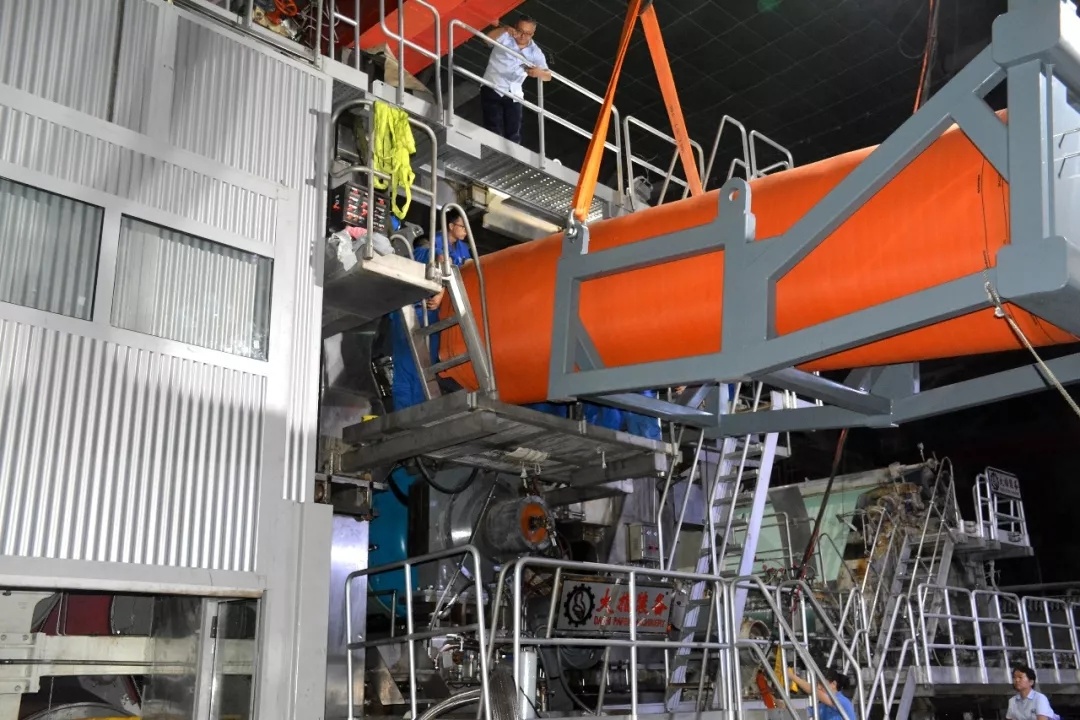
In order to solve the above problems, after discussion and research with customers, Big Finger Equipment designed a composite 3-roller 2-nip with shoe rollers to replace the original 3-roller 2-nip composite positive pressure structure.
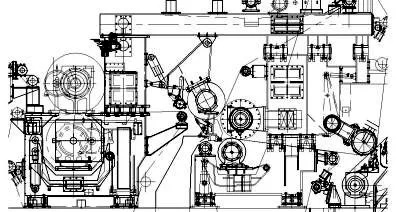
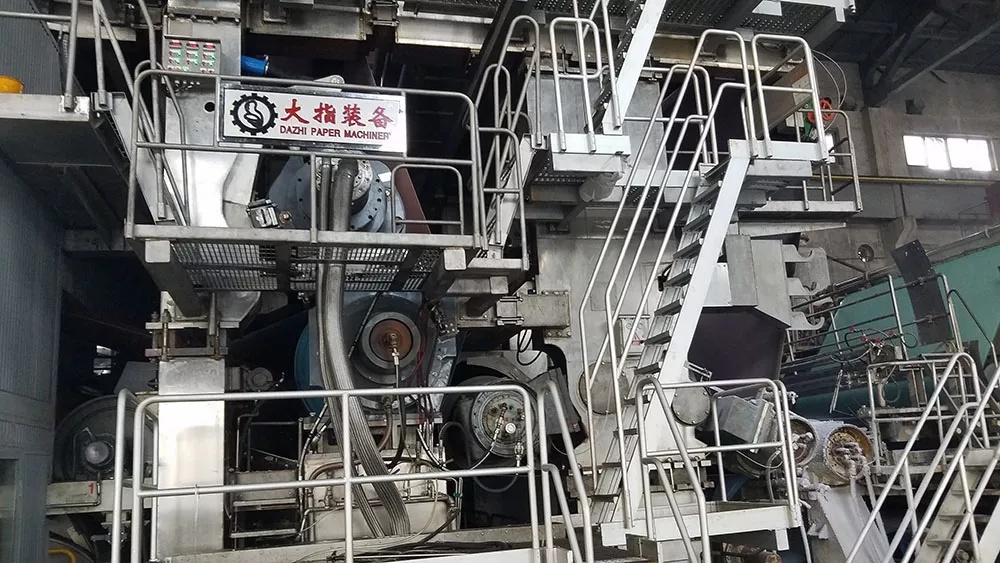
Before transformation
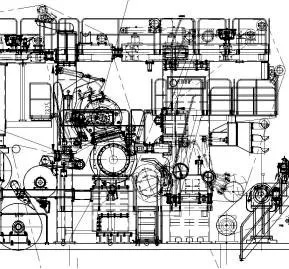
After the transformation
Advantages:
The shoe press replaces the instantaneous dynamic linear dehydration of the original roller press with the long-time wide-nip dehydration under static pressure, with high pressure and low pressure in the pressure line;
After the transformation, the structure of the press section is more compact, and the operation efficiency is greatly improved;
The number of press blankets is reduced from 3 to 2, and the matching tension, correction, transmission, vacuum box and cleaning mechanism are reduced, which greatly reduces the cost of equipment operation, management and maintenance;
The drive points, power configuration and drive control system in the press section have been made more compact, as shown in the figure below.
| Transfer points before transformation |
Motor power (Kw) |
Transmission point after transformation |
Motor power (Kw) |
| vacuum suction roll |
45 |
vacuum suction roll |
45 |
| vacuum press roll |
250 |
vacuum press roll |
250 |
| One grooving roller |
132 |
Center roll |
355 |
| Two stone roller |
132 |
||
| paper guide roller |
18 |
||
| Under positive pressure groove roller |
200 |
Comparison of transmission points and power configuration before and after the transformation of the press section
Effect after transformation:
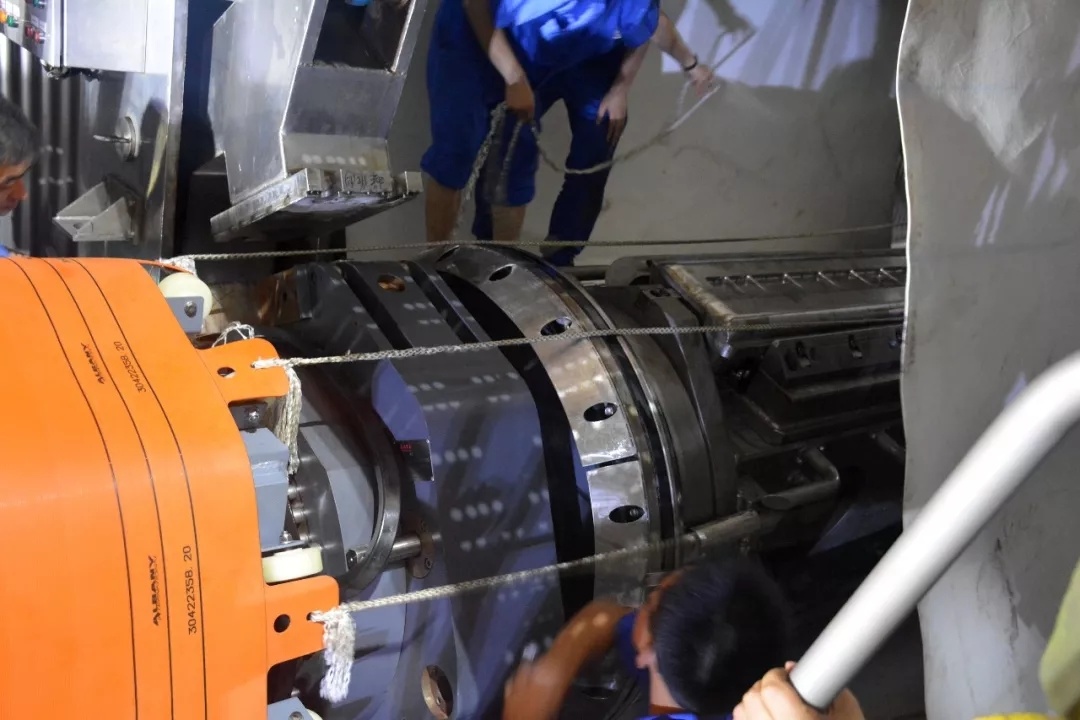
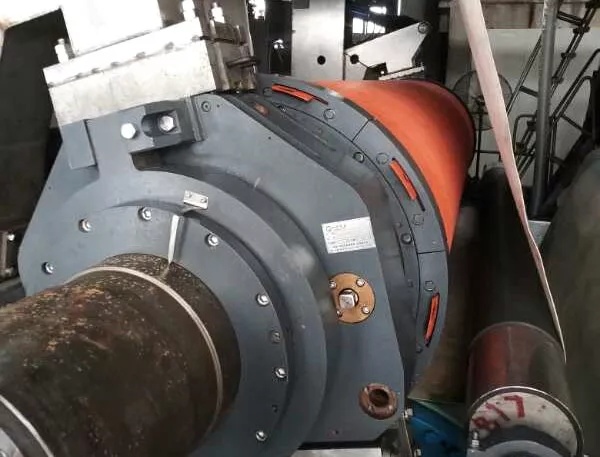
After the transformation of the press section, the dryness of the press section has increased from a high of 46% to the current 51%;
Reducing the number of broken ends of the paper web in the press section and improving the operating efficiency of the paper machine;
The steam consumption of the drying section is reduced by about 25%;
The speed increase is about 100 m/min, and the current stable operation is 900 m/min;
The thickness of the paper is improved, and other physical indicators such as tensile index and tearing are also slightly improved.
多行文本内容元素
富文本内容绑定数据后可解析HTML语言内容
Domestic Business Department
Contact person: jiguang.liu
Mobile: +8613243038828
Tel: +86-0391-7268787
Fax: +86-0391-7268787
Email: jiguang.liu@dazhipaper.com
Overseas Business Department
Contact person: Mike. Li
Mobile: +86 15538973150
Tel: +86-0391-7230928
Email: marketing@dazhipaper.com
Copyright © Henan Dazhi Papermaking Equipment and Engineering CO., LTD.